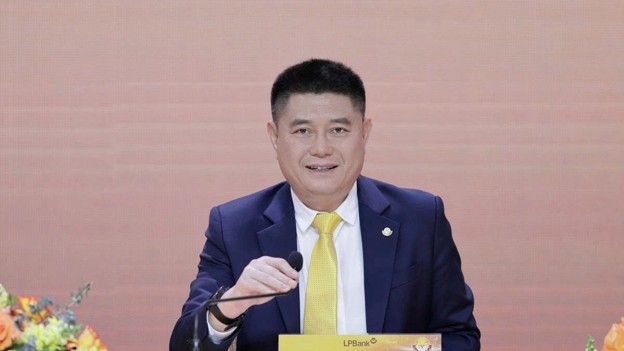
HANOI, Vietnam, 22nd Oct – Vietnamese businessman Nguyen Duc Thụy has outlined an ambitious programme for the Vietnam Football Federation (VFF) for the 2027–2031 term, setting out proposed measures to strengthen the financial foundation of Vietnamese football, expand domestic competitions, invest in youth development and improve governance.
Thụy is among three individuals nominated for the VFF presidency for the next term, alongside incumbent president Tran Quoc Tuan and Nguyen Xuan Vu, according to the list of nominations published by the federation on 21 October 2026. The nomination process remains subject to the required formalities ahead of the election.
His proposed programme places financial independence and long-term development at the centre of its approach, with focus on mobilising private-sector investment and creating a more sustainable football ecosystem across the country.
- Building a financially sustainable football system
Central objective is to increase VFF’s annual revenue to between VND600 billion and VND1 trillion from 2027, primarily through sponsorship, commercial partnerships and other non-state funding sources.
The programme aims to move towards financial self-sufficiency, reducing reliance on state budget funding and strengthening the federation’s capacity to reinvest in the development of the game.
Under the proposed funding framework, each V. League 1 club would receive VND3 billion per season while V. League 2 clubs and women’s football clubs would receive VND2 billion per season.
Eligible provincial and local football associations would also be considered for annual support of VND 2–3 billion.
The proposed measures are intended to improve the financial stability of clubs and local football organisations, enabling them to invest more consistently in competition, infrastructure and player development.
- Expanding domestic competitions and playing opportunities
The proposed agenda calls for expanding V.League 1 to 16–18 teams and V.League 2 to 18–20 teams, subject to the relevant competition and licensing requirements.
In women’s football, the programme envisages a sustainable league featuring 8–10 established clubs, providing a stronger foundation for the development of the women’s game.
Expanding the competitions would be accompanied by efforts to create more meaningful playing opportunities for domestic players, particularly younger footballers. The broader objective is to improve the depth of the player pool, raise competition standards and create a more consistent pathway from youth football to the professional game.

- Strengthening youth development and school football
Youth development is another key pillar of the proposed programme. The plan seeks to increase investment in youth academies and school football while strengthening cooperation between professional clubs, training centres, educational institutions and local communities.
International partnerships would also play an important role, with proposed cooperation involving overseas clubs and international experts to improve coaching standards, training methodologies and player development.
By connecting grassroots participation with structured development pathways, the programme aims to create more opportunities for young Vietnamese players to progress towards professional football and national-team level.
- Developing football professionals and international representation
The programme also identifies human-resource development as a priority, with plans to train at least 20 football administrators beginning 2027.
By 2030, it aims to have 5–10 Vietnamese football professionals serving in regular roles within the ASEAN Football Federation (AFF), Asian Football Confederation (AFC) or FIFA.
In officiating, the proposed agenda includes specialised training for 10–20 promising referees and assistant referees, with the objective of strengthening professional standards and creating more opportunities for qualified Vietnamese officials to work at regional and international competitions.
The programme further proposes increasing remuneration for VFF staff to two or three times current levels, linked to professional competence, responsibilities and performance. The stated objective is to attract and retain qualified personnel while building a more professional and accountable workforce.
- Improving transparency and governance
Transparency and accountability are presented as essential elements of the proposed reforms.
The programme calls for public disclosure of VFF’s income and expenditure, alongside independent financial audits conducted by a Big Four accounting firm.
It also proposes publishing development targets, implementation progress and measurable results, allowing VFF’s member organisations to monitor delivery against the programme’s stated objectives.
These measures are intended to strengthen financial oversight, improve organisational accountability and build confidence among clubs, sponsors, football stakeholders and supporters.
A long-term vision for Vietnamese football
Taken together, the proposals outline a development model built around financial sustainability, stronger domestic competitions, investment in young talent, professional expertise and transparent governance.
The programme places particular emphasis on mobilising commercial resources to support football development while improving the structures and opportunities available to clubs, players, coaches, referees and administrators.
The proposed measures would need to be translated into detailed implementation plans, funding arrangements and measurable performance targets if adopted following the VFF election for the 2027–2031 term.
As Vietnamese football looks towards its next development cycle, the proposals contribute to the wider discussion about how the country can strengthen its domestic football system and expand its professional presence within Southeast Asia and across Asian football.
About The Author